Cancer is still one of the hardest problems in medicine. Surgery, radiation, and chemotherapy save lives every day, but they often come with brutal side effects and biological limits. That's why researchers have been looking at peptides with growing excitement. These small chains of amino acids could open the door to treatments that are more precise, less toxic, and better suited to how the body actually works.
What Are Peptides, in Plain English?
Peptides are short chains of amino acids, the same building blocks that make up every protein in your body. They're small, flexible, and relatively easy to engineer in a lab. That means scientists can design them to interact with very specific targets, whether that's a receptor on a cancer cell or a switch inside the immune system, without causing collateral damage to healthy tissue. It's this specificity that makes them so interesting as an alternative (or partner) to conventional chemotherapy.
How Peptides Fight Cancer: Four Key Mechanisms
1. Targeting Cancer Cells with Precision
Cancer cells often carry unique molecular markers on their surface that healthy cells don't have. Researchers can design peptides to seek out those markers, locking onto tumour cells while ignoring normal tissue. That's a huge step forward compared to traditional chemo, which attacks all dividing cells and doesn't discriminate.
A couple of standout examples:
- Tumour homing peptides find and latch onto tumours by recognising surface receptors.
- iRGD peptides help other anti-cancer drugs get deep into tumour tissue, breaking through the dense microenvironment that blocks many therapies from reaching cancer cells.
2. Peptide-Drug Conjugates: Guided Delivery
Think of this like a guided missile. Scientists attach a potent cancer drug to a peptide, creating what's called a peptide-drug conjugate (PDC). The peptide navigates the package to cancer cells, and once it arrives, the drug is released right at the tumour. This cuts down on the widespread side effects that make conventional chemo so tough on patients.
PDCs are also smaller and cheaper to manufacture than antibody-drug conjugates, which gives them a practical edge in clinical development.
3. Engaging the Immune System
Some peptides work by training the immune system to see cancer cells as invaders. Peptide vaccines, for example, present tumour-specific mutations to T cells, essentially giving the immune system a wanted poster. Once primed, those T cells go hunting for cancer cells. This personalised approach is already being tested in early clinical trials for pancreatic and colorectal cancers.
4. Boosting Existing Immune Therapies
One of the biggest stories in 2025 and 2026 has been Anktiva (nogapendekin alfa inbakicept), a recombinant interleukin-15 receptor agonist. Technically it's a biologic protein rather than a small peptide, but it works through an immune signalling pathway that is deeply connected to peptide biology. Anktiva essentially turns up the volume on the body's own cancer-fighting cells.
Spotlight: Anktiva and IL-15 Receptor Activation
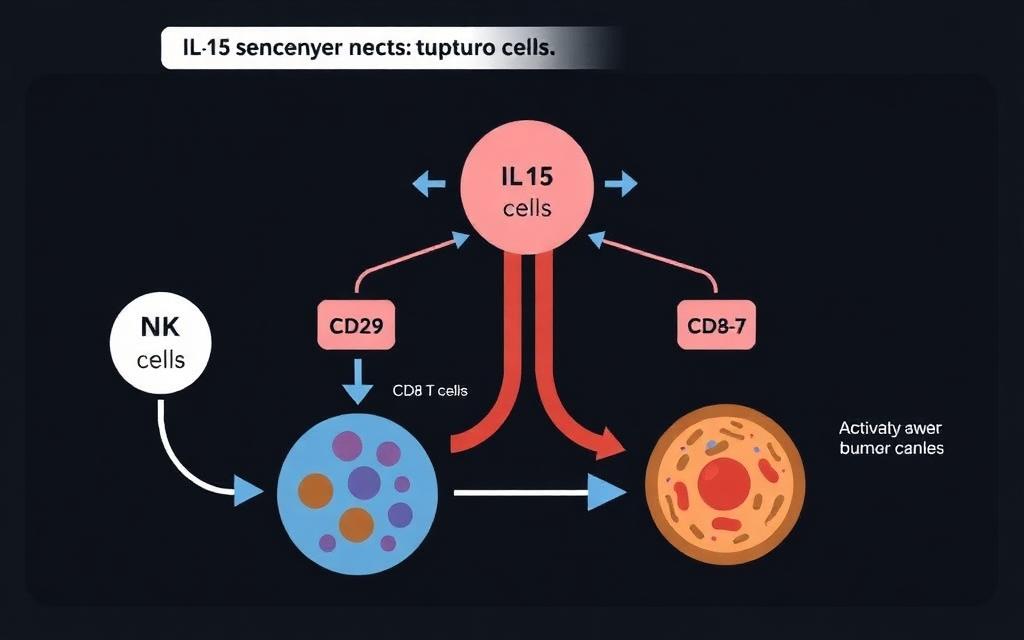
Anktiva has been approved by the U.S. FDA for adults with BCG-unresponsive non-muscle invasive bladder cancer, a form of cancer that hasn't responded to the standard BCG immunotherapy. In clinical trials, a large proportion of patients achieved complete responses that lasted over a year.
Here's how it works: Anktiva stimulates the IL-15 signalling pathway, which ramps up the activity of cytotoxic T cells and natural killer (NK) cells. As the diagram above shows, the IL-15/IL-15Rα/JAK1/PI3K/AKT/mTOR cascade is central to how immune cells get activated against tumours. The Otub1 pathway acts as a brake on that cascade. Research suggests that removing that brake leads to stronger mTOR activation and more aggressive anti-tumour immunity.
Anktiva isn't a simple peptide, but it's a perfect example of how peptide-related signalling mechanisms are driving the next generation of cancer treatments.
Other Peptide Strategies in Oncology
| Strategy | How It Works | Stage |
|---|---|---|
| Peptide-Drug Conjugates (PDCs) | Peptide guides a cancer-killing drug directly to tumour cells | Phase I to III trials |
| Tumour Homing Peptides (e.g. iRGD) | Help drugs penetrate into dense tumour tissue | Preclinical / Phase I |
| Anticancer Peptides (ACPs) | Directly kill cancer cells or block growth pathways | Preclinical / Phase I |
| Peptide Vaccines | Present tumour mutations to T cells for personalised immune response | Phase I to II trials |
| Cyclic Peptides | Ring-shaped design for improved stability and binding | Preclinical / Phase I |
| IL-15 Agonists (Anktiva) | Boost NK cell and T cell activity via IL-15 receptor pathway | FDA approved (bladder cancer) |
Peptides vs Traditional Chemotherapy
| Factor | Traditional Chemotherapy | Peptide-Based Therapies |
|---|---|---|
| Target specificity | Low: affects all dividing cells | High: binds tumour-specific markers |
| Side effects | Significant (nausea, immunosuppression, hair loss) | Generally lower thanks to targeted delivery |
| Drug resistance | Common over time | Less likely with multi-modal approaches |
| Personalisation | Limited | Can be tailored to individual tumour mutations |
| Manufacturing | Established and scalable | Improving, but more complex for some conjugates |
| Clinical availability | Widely available | Mostly in clinical trials, with some FDA-approved |
Strengths and Challenges
What Makes Peptides Exciting
- High target specificity: peptides can be engineered to bind only to molecules found on tumour cells
- Lower toxicity: targeted delivery means less collateral damage to healthy tissue
- Flexible design: a single molecule can combine targeting, immune activation, and drug delivery
- Synergy with immunotherapies: peptides can work alongside checkpoint inhibitors and biologics like Anktiva
What's Still Difficult
- Instability: many peptides break down quickly in the bloodstream and need chemical modifications to survive
- Delivery: getting drugs deep into solid tumours requires clever engineering like cyclic structures or nanoparticle encapsulation
- Clinical timeline: most PDCs and immune peptides are still in early trials, so widespread use could still be years away
The Human Side: Precision Over Force
If you or someone you know has been through cancer treatment, you'll understand why this matters. Chemotherapy works, but it takes a toll on the whole body. Peptide-based therapies represent a shift in thinking: instead of carpet-bombing everything and hoping the cancer dies first, the goal is to find the cancer and deal with it directly, while leaving the rest of the body alone.
Scientists often describe this as moving from a "bombing run" to a guided strike. It's a more thoughtful, precise way to fight the disease. And while peptide therapies are still evolving, every year brings new molecules into clinical trials and new reasons to be hopeful about where this is heading.
Key Research and References
- The Potential Use of Peptides in Cancer Treatment in Current Protein & Peptide Science (PubMed)
- Peptide Therapeutics: Unveiling the Potential against Cancer in Cancers (2023)
- Peptides as a Platform for Targeted Therapeutics for Cancer in RSC Chemical Society Reviews
- Anticancer Peptides: Mechanisms, Simple and Complex in Frontiers in Pharmacology
- Anktiva (Nogapendekin Alfa Inbakicept) on Wikipedia (FDA approval and mechanism)