
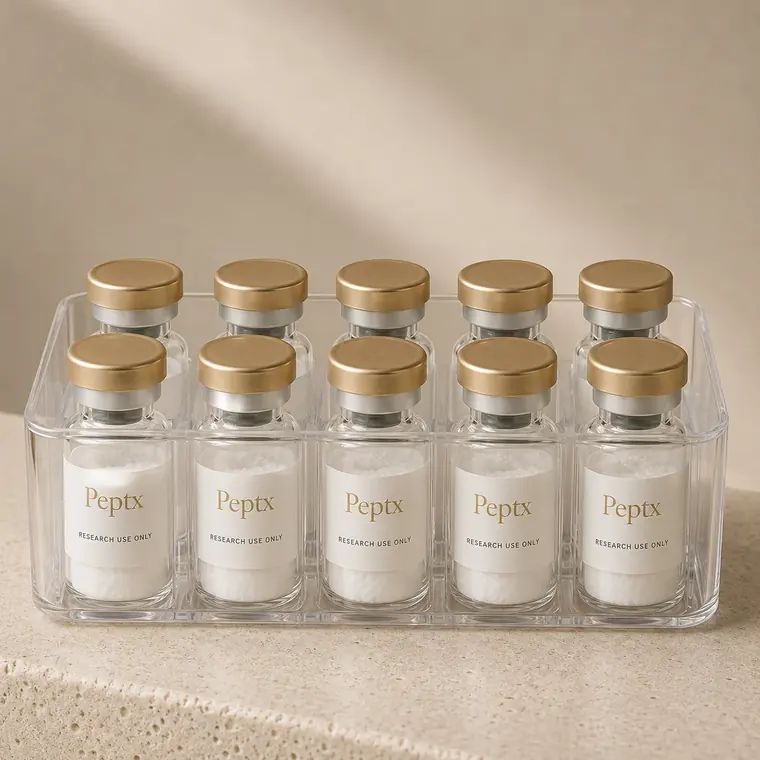
Cagrilintide
Long-acting amylin analogue. Studied alone and alongside semaglutide in amylin-receptor research.
10 vials Typ. 99%+ Purity
Research use only · Kits of 10
The full catalogue, by the kit of 10 vials, from the same manufacturing lines as the largest peptide brands, at a fraction of retail.
Some products are account only. Sign in
Long-acting amylin analogue. Studied alone and alongside semaglutide in amylin-receptor research.
Long-acting GLP-1 receptor agonist. Studied in metabolic and glycaemic regulation research.
Dual GIP/GLP-1 receptor agonist for metabolic and glucose regulation research.
Synthetic 15-amino-acid peptide based on part of a human gastric protein. Studied mainly in rat models of angiogenesis and growth-factor signalling.
Selective ghrelin receptor agonist. Studied in growth-hormone-axis research.
Growth hormone-releasing hormone analogue for GH secretion research.
Synthetic growth hormone-releasing factor analogue for GH secretion and metabolic studies.
Bremelanotide for melanocortin receptor and melanocortin signalling research.
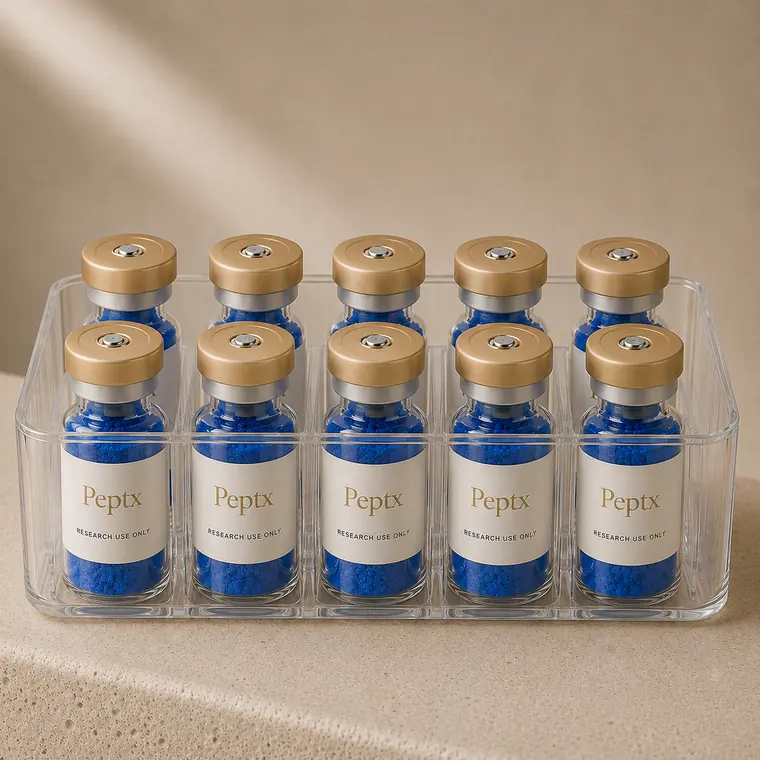
Naturally occurring copper-binding tripeptide. Studied in collagen-synthesis and dermal-cell research.
Synthetic tetrapeptide. Studied in telomerase and circadian-rhythm research.
Mitochondrial-derived peptide encoded within the 12S rRNA gene. Studied in AMPK and metabolic-signalling research.
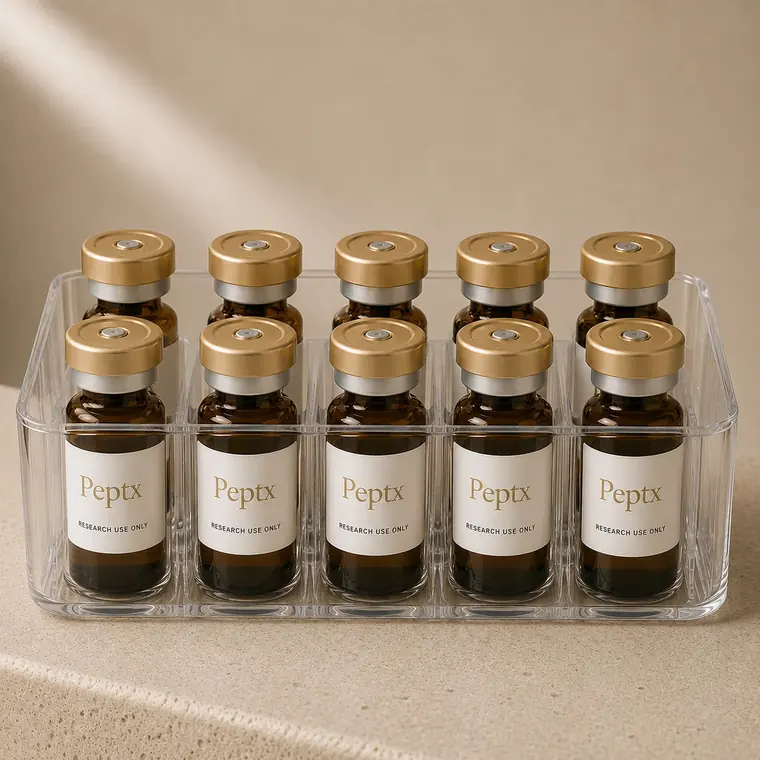
Nicotinamide adenine dinucleotide, a coenzyme found in every cell. Studied in cellular energy-metabolism research.
Long-acting amylin analogue. Studied alone and alongside semaglutide in amylin-receptor research.
Cagrilintide 5mg + Semaglutide 5mg blend for dual-target metabolic research.
Long-acting selective amylin receptor agonist (LY3841136) for amylin receptor and metabolic research.
Dual GLP-1 and glucagon receptor agonist based on oxyntomodulin. Studied in metabolic research.
Retatrutide + Cagrilintide blend for multi-target metabolic research. 10mg vial: 5mg + 5mg. 24mg vial: 20mg + 4mg.
Long-acting GLP-1 receptor agonist. Studied in metabolic and glycaemic regulation research.
Dual glucagon and GLP-1 receptor agonist. Studied in metabolic research.
Dual GIP/GLP-1 receptor agonist for metabolic and glucose regulation research.
Small-molecule inhibitor of the enzyme NNMT (nicotinamide N-methyltransferase). Studied in cell and mouse metabolism research.
Peptide studied for adipose tissue vascular mechanisms in laboratory research.
Modified C-terminal fragment of the growth hormone peptide. Studied in lipid-metabolism research.
C-terminal fragment (amino acids 176 to 191) of the growth hormone peptide. Studied in lipid-metabolism research.
Blend of BPC-157 and TB-500 in one vial. Both are studied mainly in rodent models.
Synthetic 15-amino-acid peptide based on part of a human gastric protein. Studied mainly in rat models of angiogenesis and growth-factor signalling.
Blend of BPC-157 10mg, GHK-Cu 50mg and TB-500 10mg in one vial, for laboratory research.
Blend of BPC-157 10mg, GHK-Cu 50mg, TB-500 10mg and KPV 10mg in one vial, for laboratory research.
Splice variant of IGF-1 expressed in muscle tissue under mechanical stress. Studied in satellite-cell research.
PEGylated form of Mechano Growth Factor (MGF), a splice variant of IGF-1. Studied in satellite-cell research.
Fragment of thymosin beta-4, a naturally occurring actin-binding peptide. Studied in angiogenesis and cell-migration research.
Trade name for synthetic peptides based on thymosin beta-4, an actin-binding protein. Studied in actin-binding and cell-migration research.
Nine-amino-acid peptide first isolated from rabbit blood in 1977. Studied in sleep and EEG research.
Recombinant fusion protein of the activin type IIB receptor that binds myostatin and related ligands. Studied in myostatin-pathway research.
Naturally occurring glycoprotein that binds myostatin. Studied in myostatin-pathway research.
Engineered 83-amino-acid form of IGF-1 that binds IGF-binding proteins poorly. Studied in cell culture and IGF-1 receptor research.
IGF-1 lacking its first three amino acids, des(1-3)IGF-1, which binds IGF-binding proteins weakly. Studied in cell and rodent IGF-1 research.
Blend of CJC-1295 without DAC (a GHRH analogue) and ipamorelin (a ghrelin receptor agonist). Both are studied in growth-hormone-axis research.
GHRH analogue with the DAC (drug affinity complex) modification. Studied in growth-hormone-axis research.
GHRH analogue without the DAC modification, also called modified GRF (1-29). Studied in growth-hormone-axis research.
Growth hormone-releasing peptide-2 for GHSR activation research.
Synthetic hexapeptide, an older-generation ghrelin-receptor agonist. Studied in growth-hormone-axis research.
Growth hormone-releasing peptide for GHSR activation research.
Selective ghrelin receptor agonist. Studied in growth-hormone-axis research.
Growth hormone-releasing hormone analogue for GH secretion research.
Synthetic growth hormone-releasing factor analogue for GH secretion and metabolic studies.
Fragment of human parathyroid hormone (amino acids 1 to 34). Studied in bone-remodelling research.
Synthetic analogue of alpha-MSH that activates MC1R. Studied in melanocortin-receptor research.
Bremelanotide for melanocortin receptor and melanocortin signalling research.
Naturally occurring copper-binding tripeptide. Studied in collagen-synthesis and dermal-cell research.
Palmitoyl pentapeptide for collagen synthesis and dermal matrix research.
Acetyl octapeptide for dermal and neuromuscular signalling research.
Synthetic tetrapeptide. Studied in telomerase and circadian-rhythm research.
Cell-penetrating peptide that disrupts the FOXO4-p53 interaction. Studied in cellular senescence research.
24-amino-acid peptide encoded in mitochondrial DNA. Studied in cell-survival signalling research in cells and rodents.
Mitochondrial-derived peptide encoded within the 12S rRNA gene. Studied in AMPK and metabolic-signalling research.
Nicotinamide adenine dinucleotide, a coenzyme found in every cell. Studied in cellular energy-metabolism research.
Mitochondria-targeted peptide for oxidative stress and cellular energy research.
11-amino-acid peptide modelled on part of erythropoietin (EPO). Studied in EPO-receptor and CD131 signalling research.
Human cathelicidin antimicrobial peptide for innate immunity research.
Peptide inhibitor of the TREK-1 potassium channel. Studied in ion-channel and neuronal-signalling research.
Peptide mixture extracted from calf thymus, used as a medicine in Russia. Studied in immune-cell research.
Naturally occurring 28-amino-acid thymic peptide. Studied in T-cell and immune-signalling research.
Acetic acid-preserved sterile water for reconstitution of lyophilized research compounds.
Benzyl alcohol-preserved sterile bacteriostatic water for reconstitution of lyophilized research compounds.
Tripeptide bioregulator for respiratory and bronchial tissue research.
Tetrapeptide bioregulator for reproductive endocrinology research.
Tripeptide derived from alpha-MSH. Studied in inflammatory-signalling research.
Vasoactive intestinal peptide, a 28-amino-acid regulatory peptide. Studied in circadian-rhythm and immune-signalling research.
Synthetic peptide described as a modified form of Semax. No peer-reviewed studies of Adamax itself have been published.
Mixture of low molecular weight neuropeptides derived from pig brain tissue. Studied in neurotrophic-factor research.
Modified form of Selank, a synthetic tuftsin-based heptapeptide, with N-acetyl and amide end groups. No published studies of this form yet.
Four-amino-acid CNTF fragment (Ac-DGGL-NH2), the parent of P021 without the adamantyl group. Studied in one published mouse study.
Synthetic tripeptide (Glu-Asp-Arg) from the Khavinson short-peptide programme. Studied mainly in brain and nerve cell research.
Synthetic heptapeptide analogue of tuftsin. Studied in neurotransmitter and BDNF-expression research.
Selank 10mg + Semax 10mg blend in one vial, for neuropeptide signalling research.
Synthetic heptapeptide analogue of an ACTH fragment. Studied in neurotrophic-factor research.
Tripeptide antioxidant produced by every cell. Studied in oxidative-stress research.
Human menopausal gonadotropin, a preparation with FSH and LH activity. Studied in reproductive-endocrinology research.
Kisspeptin for reproductive endocrinology and GnRH signaling research.
Nine-amino-acid peptide hormone for oxytocin receptor research.
Synthetic peptide joining part of the p53 protein to a membrane-penetrating sequence. Studied in cancer cell line research.