
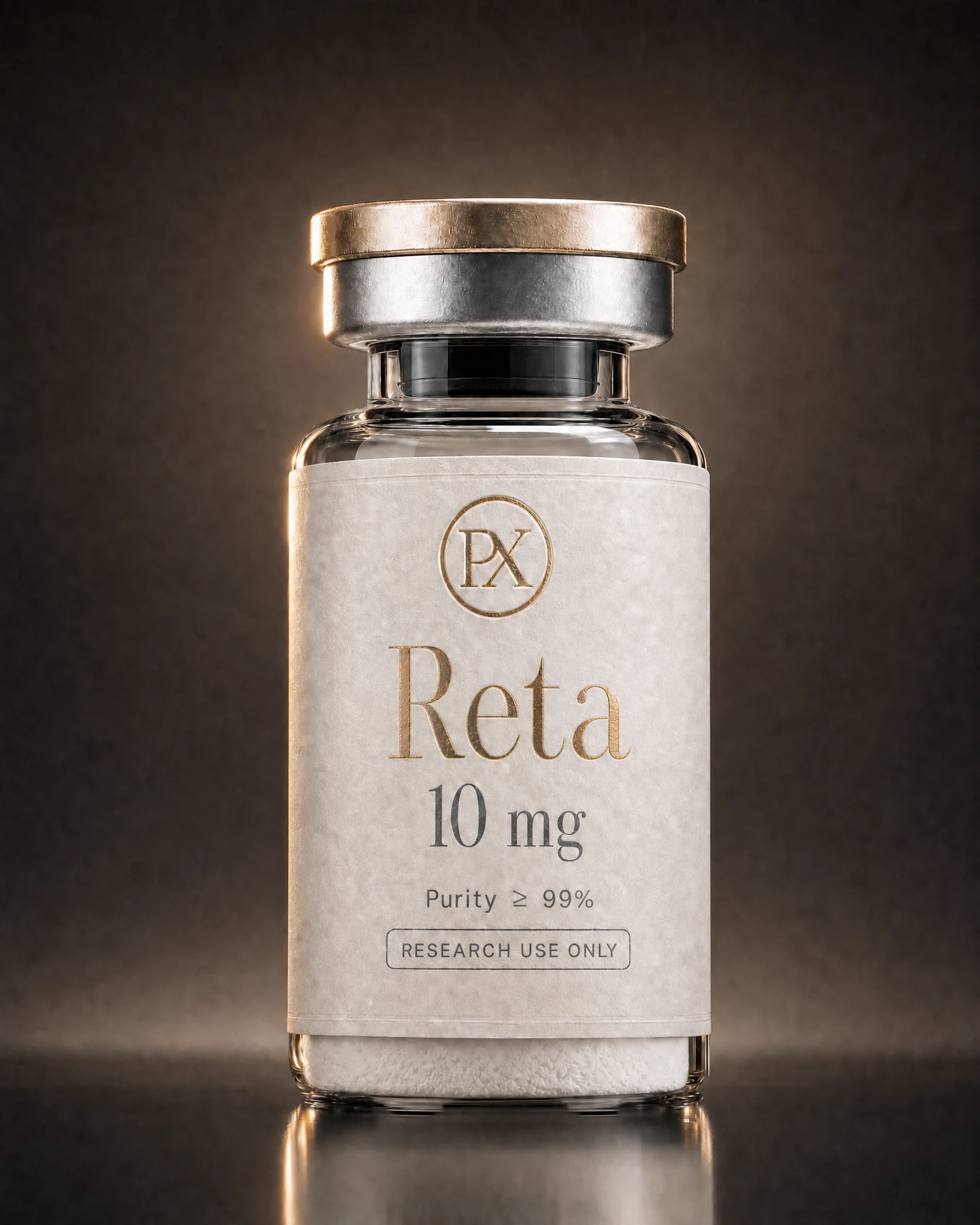
Retatrutide is a next-generation triple-acting peptide agonist that simultaneously activates GLP-1, GIP, and the glucagon receptor (GCGR). This triple mechanism makes it one of the most studied compounds in metabolic research today.
Retatrutide
Purity
99%+
Form
Lyophilized
MOQ
10 vials
Suppliers
Multi-source
What is Retatrutide (LY3437943)?
Retatrutide, also known by its development code LY3437943, is a synthetic peptide acting as a triple hormone receptor agonist. Unlike single-acting GLP-1 agonists such as Semaglutide or dual-acting compounds like Tirzepatide, Retatrutide activates three receptors simultaneously: GLP-1, GIP, and the glucagon receptor (GCGR).
This triple agonist mechanism represents a new frontier in metabolic peptide research. The glucagon receptor component is particularly noteworthy because glucagon signalling plays a key role in hepatic glucose output, lipid metabolism, and energy expenditure. By engaging all three pathways, Retatrutide provides researchers with a unique tool for studying integrated metabolic regulation.
Retatrutide has been the subject of peer-reviewed publications and clinical trials. The Phase 2 trial published in The New England Journal of Medicine (NEJM) reported defined metabolic endpoints in trial populations. The compound remains investigational and is not licensed for human use.
Triple Agonist Mechanism of Action
Retatrutide's unique pharmacological profile stems from its ability to activate three distinct G-protein coupled receptors (GPCRs). Each receptor pathway contributes to the compound's observed effects in preclinical and clinical research settings.
GLP-1 Receptor
Glucagon-like peptide-1 receptor activation enhances glucose-dependent insulin secretion and suppresses glucagon release. GLP-1 agonism is the most established pathway in metabolic peptide research, as demonstrated by compounds such as Semaglutide.
GIP Receptor
Glucose-dependent insulinotropic polypeptide receptor activation complements GLP-1 effects and is associated with improved lipid metabolism in adipose tissue. Dual GLP-1/GIP agonism is the mechanism behind Tirzepatide (Mounjaro).
Glucagon Receptor (GCGR)
The glucagon receptor pathway is what distinguishes Retatrutide from other incretin-family research compounds. Published preclinical work characterises GCGR activation in hepatic glycogenolysis and thermogenesis pathways in animal models.
For a detailed overview of GLP-1 receptor pharmacology, see the PubMed database or the UniProt GLP-1R entry.
Research Applications
Retatrutide is used in laboratory research settings to investigate a range of metabolic pathways. Published studies and ongoing trials have explored the following areas:
- Glucose Homeostasis: Studying the combined effects of triple receptor agonism on insulin sensitivity, beta-cell function, and postprandial glucose regulation in vitro and in vivo models.
- Lipid Metabolism: Investigating hepatic lipid oxidation and adipose tissue lipolysis mediated by simultaneous GCGR and GIP activation.
- Energy Expenditure: Measuring the thermogenic effects of glucagon receptor engagement alongside incretin signalling.
- Comparative Studies: Benchmarking triple agonist activity against single-acting (Semaglutide) and dual-acting (Tirzepatide) compounds.
- Receptor Binding Affinity: Characterizing binding kinetics at each of the three target receptors using radioligand displacement assays.
For the latest published research on Retatrutide, visit Google Scholar or the ClinicalTrials.gov registry.
Storage, Handling, and Reconstitution
Proper storage and handling of Retatrutide is critical for maintaining peptide stability and ensuring reproducible research results. Follow these laboratory best practices:
Long-Term Storage
Store unreconstituted lyophilized Retatrutide at -20 to -80 degrees Celsius. At these temperatures, the peptide remains stable for 24 months or longer. Keep vials sealed and protected from light and moisture.
Short-Term Storage
For active research use, unreconstituted vials may be stored at 2 to 8 degrees Celsius (standard refrigerator temperature) for up to 90 days without significant degradation.
Reconstitution
Reconstitute with bacteriostatic water (0.9% benzyl alcohol) or sterile water. Add solvent slowly along the vial wall to avoid damaging the peptide structure. Do not vortex; gently swirl until fully dissolved.
Post-Reconstitution
Once reconstituted, store at 2 to 8 degrees Celsius and use within 28 days. Avoid repeated freeze-thaw cycles. For long-term storage of reconstituted peptide, aliquot into single-use portions before freezing.
For comprehensive peptide handling protocols, refer to our Research Equipment and Protocols guide.
Retatrutide Technical Specifications
Reference specification for the lyophilised research material supplied by Peptx. Manufacturer analysis sits behind the material, and buyers may independently verify identity and purity through an accredited ISO 17025 laboratory.
| Research code | LY3437943 |
|---|---|
| CAS number | 2381089-83-2 |
| Molecular formula | C221H342N46O68 |
| Molecular weight | 4731.3 g/mol (approximate) |
| Sequence length | 39 amino acids, C20 diacid fatty acid conjugate |
| Receptor targets | GLP-1, GIP and glucagon (GCGR) |
| Physical form | White to off-white lyophilised powder |
| Purity | Typically 99%+ by HPLC, guaranteed minimum stated per compound |
| Identity method | HPLC and mass spectrometry |
| Vial sizes | 10mg, 15mg, 20mg, 30mg, 40mg, 50mg, 60mg |
| Solubility | Soluble in bacteriostatic or sterile water |
| Storage | -20C long term, 2-8C short term, protect from light |
| Intended use | Laboratory research only, not for human consumption |
Values are reference figures for laboratory identification. Batch specific figures are stated on the analysis supplied with each consignment, and published results are listed in the independent lab results library.
Quality Assurance
Peptx sources all Retatrutide exclusively from vetted manufacturers, gauged on independent testing at accredited ISO 17025 labs plus active community feedback, all maintaining rigorous internal quality control. Guaranteed minimum purity is stated per compound, see our Purity Guarantee.
Multi-source vetted suppliers
Suppliers are vetted across independent ISO 17025 lab testing and live community feedback. Any supplier failing benchmarks or losing community trust is immediately removed.
Independent Testing Available
Buyers can independently verify product purity through accredited third-party labs. See our recommended services.
Browse recommended independent testing services on the Third-Party Testing page.
Retatrutide vs Tirzepatide vs Semaglutide
Side-by-side comparison of the three most studied incretin-family research compounds.
| Attribute | Retatrutide | Tirzepatide | Semaglutide |
|---|---|---|---|
| Development code | LY3437943 | LY3298176 | NN9535 |
| Receptor targets | GLP-1 / GIP / GCGR | GLP-1 / GIP | GLP-1 |
| Mechanism | Triple agonist | Dual agonist | Single agonist |
| Half-life (approx) | ~6 days | ~5 days | ~7 days |
| Administration cadence in trials | Weekly | Weekly | Weekly |
| Doses available at Peptx | 10, 15, 20, 30, 40, 50, 60 mg | 10, 15, 30, 60 mg | 5, 10, 15, 20 mg |
| Research focus | Metabolic + energy expenditure | Metabolic + glycaemic | Glycaemic |
| Clinical status | Investigational (Phase 3) | Approved (Mounjaro) | Approved (Ozempic / Wegovy) |
Frequently Asked Questions About Retatrutide
What is Retatrutide?▼
What purity is Peptx Retatrutide?▼
What doses of Retatrutide are available?▼
How should Retatrutide be stored?▼
Where can I buy Retatrutide in the UK?▼
Is Retatrutide available for purchase in Europe?▼
How much does Retatrutide cost?▼
What is the difference between Retatrutide 10mg and higher doses?▼
How is Retatrutide reconstituted for research use?▼
Related Research Peptides
Researchers studying Retatrutide often compare results with these related compounds:
Semaglutide
Single-acting GLP-1 receptor agonist widely used as a benchmark in metabolic research.
GLP-1/GIP DualTirzepatide
Dual GLP-1/GIP receptor agonist (Mounjaro) for comparative metabolic pathway studies.
Amylin AnalogueCagrilintide
Long-acting amylin analogue under investigation for combination research with GLP-1 compounds.
Ready to Order Retatrutide?
Get factory-direct pricing on high purity Retatrutide. Available in 10mg to 60mg vials with worldwide shipping.
Retatrutide (LY3437943) is sold by Peptx strictly for laboratory and research purposes only. It is not intended for human consumption, veterinary use, food additive, or cosmetic applications. By purchasing this product, the buyer confirms it will be used exclusively for qualified scientific research. Peptx makes no claims regarding therapeutic efficacy. All product information is provided for educational and research reference purposes.