
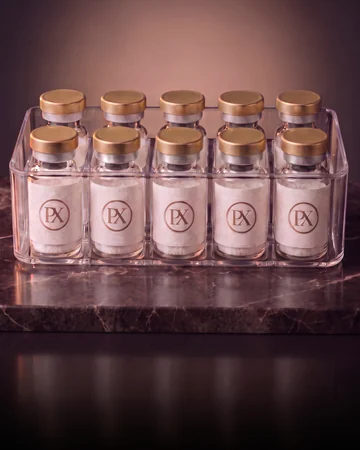
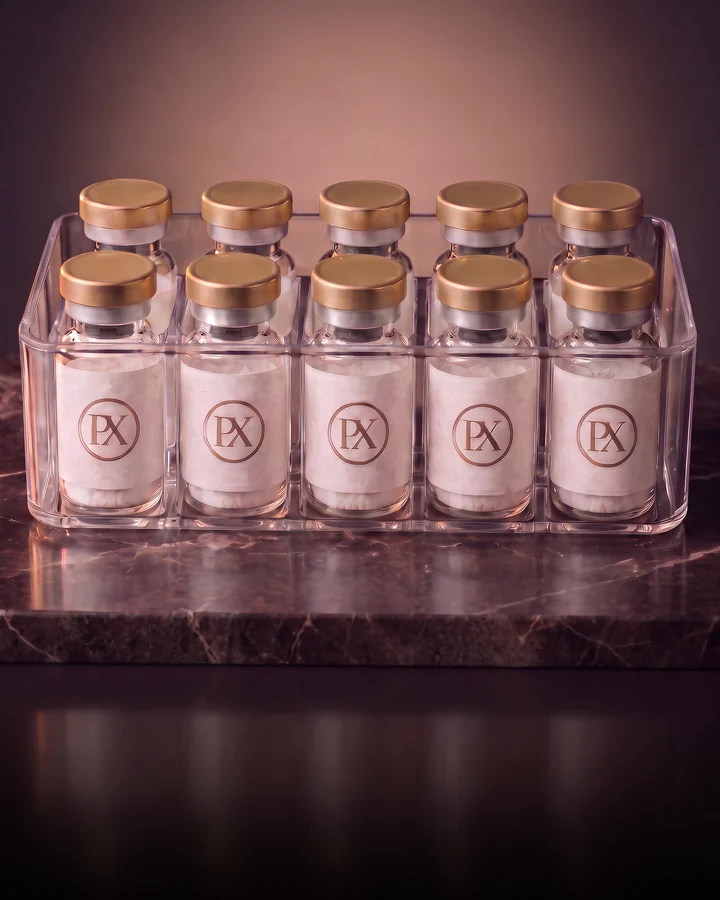
20mg× 10 vials
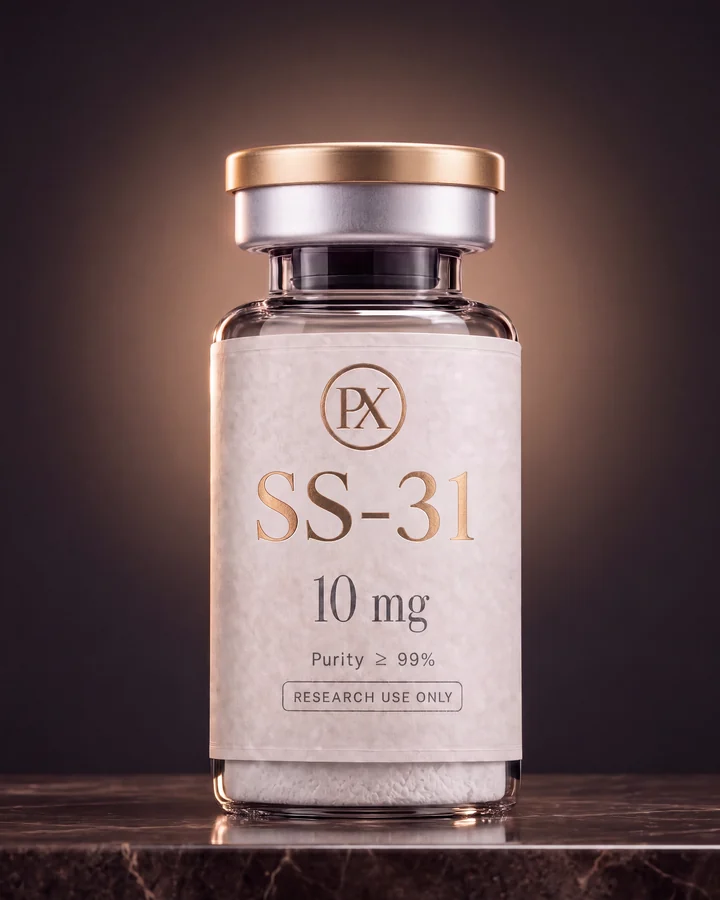
Strength
Order by 3pm for same-day dispatch
For laboratory research use only. Not for human or veterinary use.
Mitochondria-targeted peptide for oxidative stress and cellular energy research.
Guaranteed minimum purity: ≥98%. Purity Guarantee
Research areasCellular Senescence
SS-31 carries two positive charges and two ring-shaped (aromatic) groups, which let it enter cells and gather at the inner mitochondrial membrane, where it binds cardiolipin, a negatively charged lipid. In cell, isolated-mitochondria and animal studies this binding was linked to more stable membrane folds (cristae), less production of reactive oxygen species and changes in the membrane's surface charge (Mitchell et al., 2020). How these effects relate to clinical outcomes in people is still being studied.
SS-31 (elamipretide; earlier codes MTP-131 and Bendavia) is a synthetic four-amino-acid peptide, D-Arg-Dmt-Lys-Phe-NH2, where Dmt is a modified tyrosine. It is one of the Szeto-Schiller peptides from Szeto's laboratory at Weill Cornell Medical College, and Stealth BioTherapeutics developed it as a medicine. It has been studied widely in cells and animals. A phase 3 placebo-controlled trial in 218 adults with primary mitochondrial myopathy did not meet its primary goals for walking distance or fatigue (Karaa et al., Neurology 2023). In Barth syndrome, a rare inherited disorder of the mitochondrial lipid cardiolipin, a 12-person placebo-controlled crossover trial also missed its primary goals; walking distance was better than at the start during an open-label follow-up with no placebo group (Thompson et al., Genet Med 2021). In September 2025 the US FDA granted elamipretide (as Forzinity) accelerated approval for Barth syndrome, based on knee muscle strength, and requires a further placebo-controlled trial to confirm the result. It is not authorised in the EU. The material supplied here is not the licensed medicine. Supplied for laboratory research use only.
SS-31 (elamipretide) is a synthetic four-amino-acid peptide that targets the inner membrane of mitochondria. It came from Szeto's laboratory at Weill Cornell Medical College and was developed as a medicine by Stealth BioTherapeutics. It is supplied here for laboratory research use only.
It gathers at the inner mitochondrial membrane and binds cardiolipin, a lipid found there. In cell and animal studies this was linked to more stable membrane structure and less production of reactive oxygen species.
A phase 3 trial in 218 adults with primary mitochondrial myopathy did not meet its primary goals (Karaa et al., 2023), and a small crossover trial in Barth syndrome also missed its primary goals before an open-label follow-up. In 2025 the US FDA granted accelerated approval for Barth syndrome, conditional on a further confirmatory trial; the research material sold here is not that licensed medicine.
Store the freeze-dried powder sealed, cold and away from light, following standard laboratory peptide storage procedures. See the product specifications for detailed storage requirements.