0.1mg× 10 vials
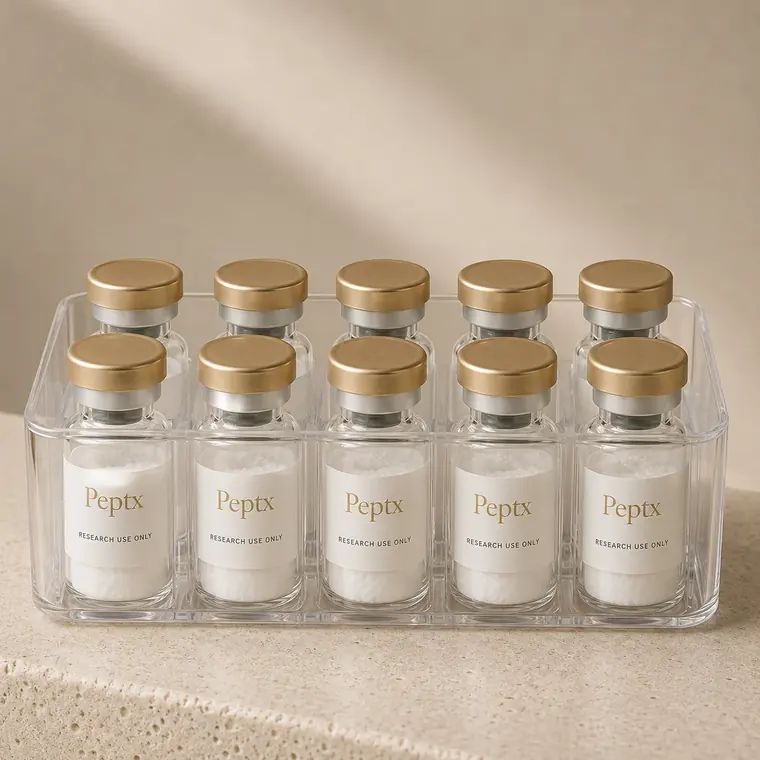 ≥99% stated purity
Strength
Volume pricing
Any mix of Factory Direct kits counts. Not combined with discount codes.
No Factory Direct kits in your cart yet
With this kit in, 4 kits more of any Factory Direct kit and they are all 5% off.
For laboratory research use only. Not for human or veterinary use.
Naturally occurring glycoprotein that binds myostatin. Studied in myostatin-pathway research.
Guaranteed minimum purity: ≥95%. Purity Guarantee
Research areasExercise Adaptation
Follistatin is a binding protein rather than a receptor agonist. It binds activins and myostatin, members of the TGF-beta family of growth-signalling proteins, in the fluid around cells, and in lab binding tests it stopped myostatin from binding its receptor, activin receptor type IIB (Lee and McPherron, 2001). Blocking this signal in mice, by making extra follistatin in muscle, gave muscle increases similar to those in mice lacking myostatin. It was first identified as a protein that inhibits FSH release from the pituitary.
Follistatin is a naturally occurring glycoprotein (a protein with sugar chains attached), first isolated from ovarian follicular fluid as a protein that inhibits release of follicle-stimulating hormone (FSH) from the pituitary. The human gene makes two precursor forms, of 344 and 317 amino acids; "Follistatin 344" (FS344) names the longer one, and the mature protein is about 315 amino acids, so it is a protein rather than a short peptide. Interest for muscle research comes from animals: mice engineered to make extra follistatin in muscle had large increases in muscle mass (Lee and McPherron, PNAS 2001), and macaques given the FS344 gene in a virus vector had larger, stronger thigh muscles. In people, the only published studies are two small gene therapy trials from one US group, six patients each with Becker muscular dystrophy or inclusion body myositis, with no placebo group; the second trial's claims were publicly disputed. These delivered the FS344 gene, not the protein. There are no published controlled human trials of follistatin protein. An anti-doping analysis of 17 products sold online as FS344 found follistatin in only nine (Reichel et al., Drug Test Anal 2019). Long-term safety and effects outside muscle are not known. Supplied for laboratory research use only.
Follistatin is a naturally occurring glycoprotein that binds activins and myostatin. FS344 names the longer of its two precursor forms, 344 amino acids before processing, and the mature protein is about 315 amino acids. It is supplied here for laboratory research use only.
It binds myostatin and activins in the fluid around cells and stops them binding their receptor, activin receptor type IIB. Mice engineered to make extra follistatin in muscle had much larger muscles (Lee and McPherron, 2001). It was first identified as a protein that inhibits FSH release.
Only as gene therapy: two small trials of six people each delivered the FS344 gene using a virus vector, in Becker muscular dystrophy and inclusion body myositis, without a placebo group. These did not test the protein itself, and the second trial's claims were disputed. There are no published controlled human trials of follistatin protein.
Store the freeze-dried protein sealed, cold and away from light, following standard laboratory storage procedures for proteins. See the product specifications for detailed storage requirements.