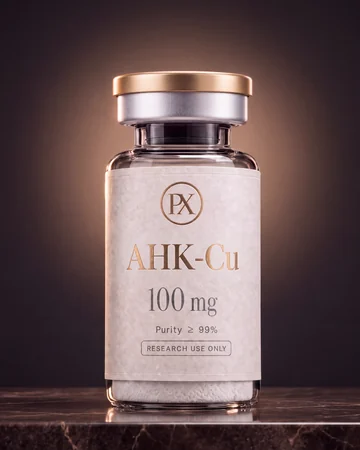
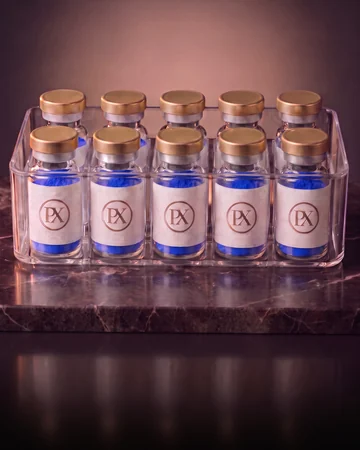
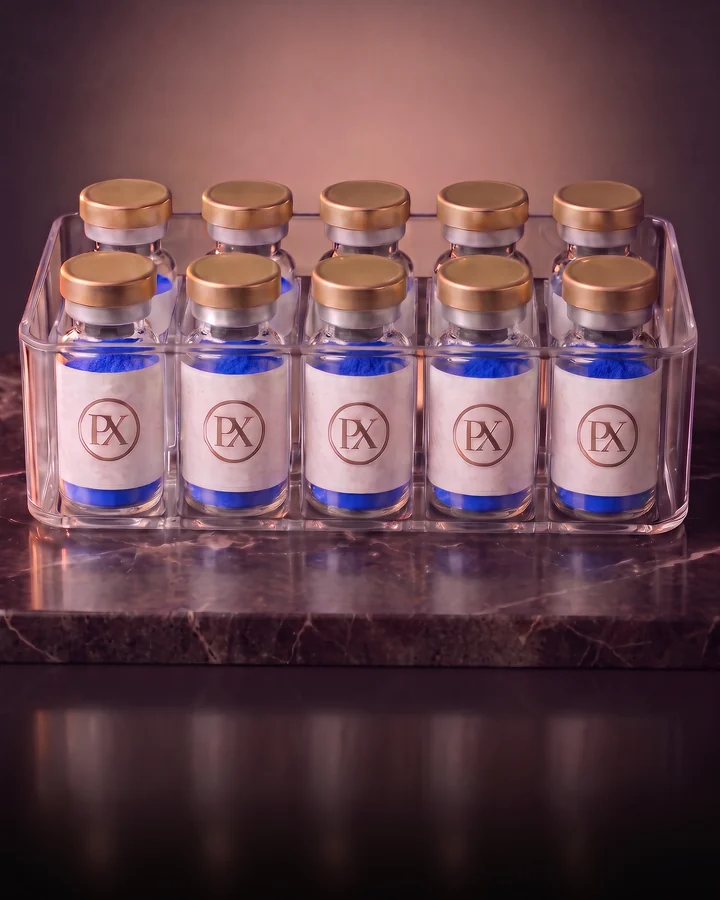
70mg× 10 vials
New
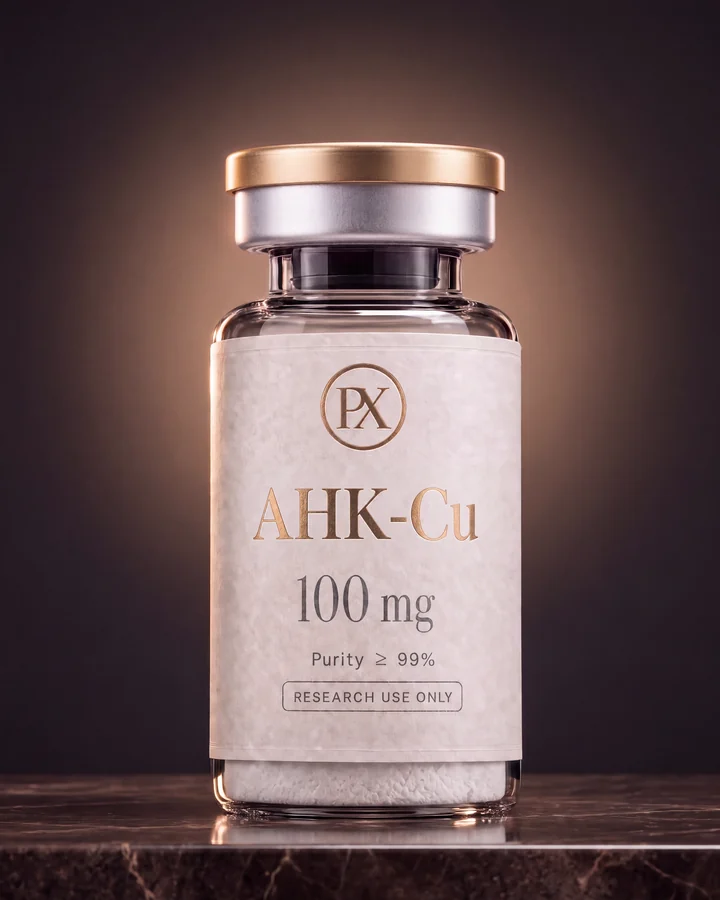
Strength
Order by 3pm for same-day dispatch
For laboratory research use only. Not for human or veterinary use.
Copper peptide for dermal and follicular biology research.
Guaranteed minimum purity: ≥98%. Purity Guarantee
Research areasDermatological Research, Follicular Biology
AHK-Cu holds a copper ion through the peptide's starting amino group, the next backbone nitrogen and the histidine side chain, the binding pattern described for peptides that start with any amino acid followed by histidine, such as GHK (Gonzalez et al., 2017). No receptor or cell target for AHK-Cu has been identified, and whether it carries copper into cells has not been shown. In the one published cell study, it raised the ratio of the cell-survival protein Bcl-2 to Bax and lowered cleaved caspase-3 and PARP, markers of programmed cell death, in cultured human dermal papilla cells (Pyo et al., 2007).
AHK-Cu is a synthetic complex of the tripeptide alanine-histidine-lysine (Ala-His-Lys) with a copper ion. It differs from the better-known copper peptide GHK-Cu (glycine-histidine-lysine) by one amino acid, with alanine in place of glycine. Peptides that start with any amino acid followed by histidine, as both of these do, hold copper in a well-described way through three nitrogen atoms. Published research on AHK-Cu itself is very limited. The only study listed on PubMed is a cell and tissue culture study from the dermatology department at Seoul National University (Pyo et al., Arch Pharm Res 2007). Human hair follicles kept alive in culture grew longer when exposed to AHK-Cu, and cultured dermal papilla cells (the cells at the base of a hair follicle) multiplied more. The fall in the number of dying cells the authors measured was not statistically clear. No animal studies or human trials of AHK-Cu have been published, the findings have not been repeated by another group, and no study has compared its stability or activity directly with GHK-Cu. Supplied for laboratory research use only.
AHK-Cu is a synthetic complex of the tripeptide alanine-histidine-lysine with a copper ion. It differs from the better-known GHK-Cu by one amino acid, alanine in place of glycine. It is supplied here for laboratory research use only.
The peptide holds copper through its starting amino group, a backbone nitrogen and the histidine side chain, as GHK does. No receptor or cell target has been identified. In one cell study it shifted markers of programmed cell death in cultured hair follicle cells.
Published work is limited to a single cell and tissue culture study, in which human hair follicles kept in culture grew longer and dermal papilla cells multiplied more when exposed to AHK-Cu (Pyo et al., 2007). No animal studies or human trials have been published, and no study has compared it directly with GHK-Cu.
Store the freeze-dried powder sealed, cold and away from light, following standard laboratory peptide storage procedures. See the product specifications for detailed storage requirements.