
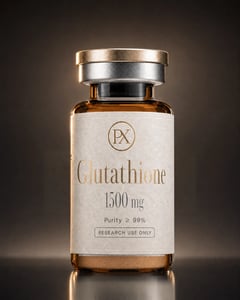
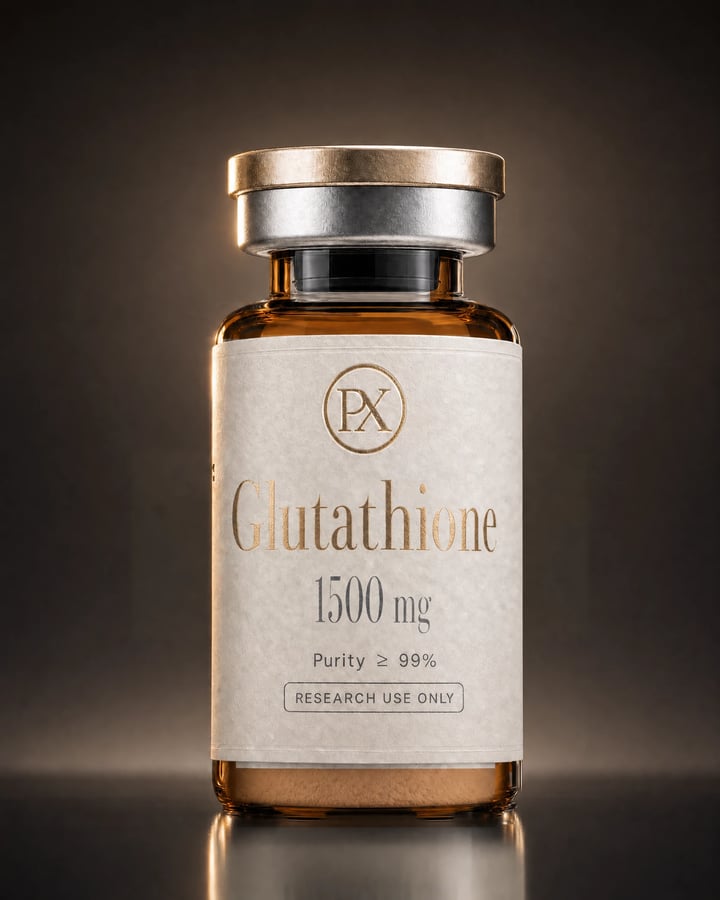
Glutathione Single vial · Oxidative Stress Research
Strength
Volume pricing
Any mix of Express vials counts. Not combined with discount codes.
Add 1 more to unlock 5% off
Your basket is empty
With this one in, 1 vial more of anything and the whole basket is 5% off.
For laboratory research use only. Not for human or veterinary use.
Buying at volume? Glutathione factory direct
About Glutathione+
About Glutathione
Glutathione (GSH) is a tripeptide, a chain of three amino acids: glutamate, cysteine and glycine (gamma-L-glutamyl-L-cysteinyl-glycine). The 'gamma' means the glutamate is linked through its side chain rather than its main chain. Cells make it themselves using two enzymes, glutamate cysteine ligase and glutathione synthetase, and it is the most abundant small sulphur-containing (thiol) molecule in cells (Lu, 2013). Its role in cell chemistry is well established from decades of cell, animal and human research. Trials giving glutathione to people are fewer, smaller and mixed. In healthy adults, a 4-week randomised trial of 40 people found no change in markers of oxidative stress or in glutathione status (Allen and Bradley, 2011), while a 6-month trial of 54 people reported higher glutathione levels in blood. Trials on skin colour are few and short (for example 60 people over four weeks), and a systematic review called that evidence inconclusive because of study quality and inconsistent results (Dilokthornsakul et al., 2019). A placebo-controlled trial in 45 people with Parkinson's disease found no difference from placebo. How much glutathione is absorbed intact, and its long-term safety, are not established. Supplied for laboratory research use only.
Mechanism
Glutathione's working part is the sulphur (thiol) group on its cysteine. Glutathione peroxidase enzymes use it to break down hydrogen peroxide and lipid peroxides, turning glutathione into its oxidised, paired form (GSSG), which glutathione reductase converts back. Glutathione transferase enzymes attach it to reactive foreign chemicals, a step in removing them from cells. This chemistry is established from cell, animal and human biochemistry.
Storage and handling
- Sealed and lyophilised, store at 2 to 8°C away from light and moisture. Minus 20°C for longer.
- Once reconstituted, keep refrigerated and avoid repeated freeze and thaw cycles.
- Bacteriostatic water is the usual diluent. The volume added sets the concentration in mg per mL.
- Vials carry a batch number for your laboratory records. Recent independent lab results are published in our COA Library.
FAQs
Can I order a single vial of Glutathione without a minimum order?+
Yes. The single-vial range exists precisely so a laboratory can take one vial of Glutathione rather than a full Factory Direct kit of 10. There is no minimum order quantity on this format.
How quickly does a Glutathione single vial ship in the UK?+
Single vials are held in our UK facility and dispatched within 24 hours of a cleared payment on working days, on a tracked UK service. Orders placed at the weekend go out on the next working day.
How does the single vial differ from the factory-direct box?+
The compound and the manufacturing source are the same. The Factory Direct kit is a 10-vial pack and a lower per-vial cost, while the single vial is one vial from UK stock for small-scale or pilot work.
What purity is stated for Glutathione?+
99%+ manufacturer-stated purity. Buyers are encouraged to run independent third-party verification, and our testing directory lists laboratories that perform it.
Is this Glutathione vial for human use?+
No. Every Peptx product, including the single-vial range, is supplied strictly for laboratory research. It is not for human consumption, diagnosis, treatment or any clinical use.
What is glutathione?+
Glutathione (GSH) is a tripeptide made of glutamate, cysteine and glycine, produced inside the body's own cells. It is the most abundant small sulphur-containing molecule in cells and takes part in redox chemistry, the balance between oxidation and reduction. It is supplied here for laboratory research use only.
How does glutathione work?+
Its cysteine carries a reactive sulphur (thiol) group. Glutathione peroxidases use it to break down peroxides, producing oxidised glutathione (GSSG) that glutathione reductase turns back, and glutathione transferases attach it to reactive chemicals.
What have human studies found?+
Trials in people are small and mixed: a 4-week trial in 40 healthy adults found no change in oxidative stress markers, while a 6-month trial in 54 adults reported higher glutathione levels in blood. Skin colour trials are few and short, and a systematic review called that evidence inconclusive.
How is glutathione stored?+
Store the powder sealed, cold and away from light, following standard laboratory peptide storage procedures. See the product specifications for detailed storage requirements.
Other single vials in Oxidative Stress Research
Strictly for laboratory research. Not for human consumption, diagnosis or treatment.